
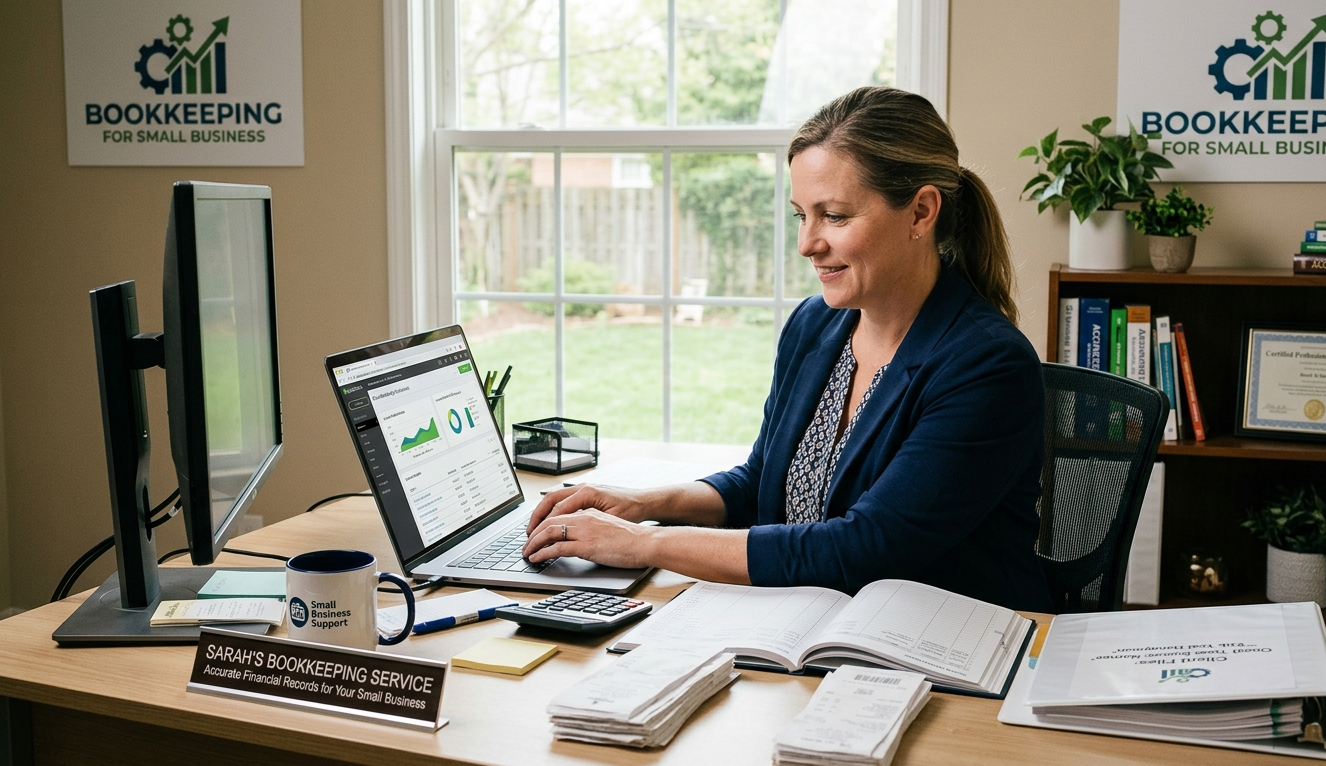
The Complete Guide to Accurate, Affordable & Growth-Ready Financial Records
Table of Contents
Introduction: Why Bookkeeping Is the Backbone of Every Small Business
Running a small business is one of the most rewarding ventures a person can undertake — but it comes with a mountain of responsibilities. Among all the moving parts, bookkeeping service for small business stands out as the single most critical operational function that determines whether a company grows sustainably or struggles in the dark. Without clean, accurate financial records, small business owners cannot make sound decisions, cannot satisfy tax obligations, and cannot attract investors or lenders when they need capital the most.
Yet, bookkeeping is also one of the most neglected tasks in the small business world. Many entrepreneurs start with spreadsheets, pass receipts to an accountant once a year, or simply hope for the best. This reactive approach costs thousands of dollars in missed deductions, late penalties, and poor cash-flow decisions every single year.
This comprehensive guide explains everything you need to know about professional bookkeeping services for small businesses — what they include, why they matter, how to choose the right provider, and how outsourcing your books can free you to focus on what you do best: growing your business.
Whether you are a freelancer, a retail shop owner, a restaurant operator, or a service-based SME, professional bookkeeping is not a luxury — it is the foundation of financial health.
1. What Is Bookkeeping? Understanding the Basics
Bookkeeping is the systematic process of recording, organizing, and maintaining all financial transactions of a business. Every sale, every purchase, every payroll run, every bank transfer — these events generate financial data that must be captured accurately and consistently. The person or service responsible for this task is a bookkeeper.
The Difference Between Bookkeeping and Accounting
Many small business owners confuse bookkeeping with accounting, but they are distinct disciplines that work together. Bookkeeping focuses on the day-to-day recording of transactions — data entry, bank reconciliation, ledger maintenance, and report generation. Accounting takes that clean data and interprets it: preparing financial statements, performing audits, providing tax strategy, and advising on business growth.
Think of bookkeeping as laying the bricks and accounting as the architect who reads the blueprints. Without precise small business bookkeeping, even the best accountant cannot produce reliable reports or useful tax advice.
Core Tasks Included in a Bookkeeping Service
- Recording daily income and expense transactions
- Reconciling bank and credit card statements monthly
- Managing accounts payable and accounts receivable
- Generating profit and loss (P&L) statements
- Maintaining the general ledger
- Preparing balance sheets and cash flow statements
- Payroll processing and wage tracking
- Sales tax calculations and compliance
- Preparing data for annual tax filing
2. Why Small Businesses Need Professional Bookkeeping Services
Many small business owners attempt to handle their own bookkeeping — and most regret it. Here is why professional bookkeeping services for small businesses deliver a measurable return on investment.
2.1 Financial Clarity and Real-Time Decision Making
Without up-to-date books, you are running your business blind. A professional bookkeeping service for small business gives you real-time visibility into your cash position, outstanding invoices, and monthly profitability. This clarity allows you to make confident pricing decisions, manage payroll on time, and identify which products or services generate the most margin.
2.2 Tax Compliance and Penalty Avoidance
Tax authorities around the world are becoming increasingly sophisticated at detecting discrepancies in financial records. Small businesses without organized books are far more likely to face audits, penalties, or interest charges. A professional bookkeeper ensures your records are audit-ready at all times, your deductions are correctly claimed, and your tax filings are submitted on schedule.
2.3 Cash Flow Management
Cash flow is the lifeblood of any small business. Profitable businesses can and do fail when they run out of cash — a painful reality that many entrepreneurs discover too late. Professional bookkeeping tracks receivables aging, flags overdue invoices, and provides a clear picture of upcoming payment obligations, giving you time to act before a cash crunch becomes a crisis.
2.4 Business Loan and Investment Readiness
When you approach a bank for a business loan or engage with investors, the first thing they request is your financial statements. Clean, professionally maintained books signal credibility and reduce the risk of rejection. Many small businesses lose funding opportunities not because their business model is weak, but because their financial records are disorganized or incomplete.
2.5 Time Savings and Focus
Time is the scarcest resource for any small business owner. Every hour spent wrestling with spreadsheets or reconciling bank statements is an hour not spent on sales, customer service, or product development. Outsourcing your bookkeeping to a dedicated service provider gives you that time back — and peace of mind that the numbers are right.
According to industry surveys, small business owners who outsource bookkeeping save an average of 10–15 hours per month — time that can be directly reinvested into revenue-generating activities.
3. Types of Bookkeeping Services Available for Small Businesses
Not all bookkeeping services are created equal. Depending on your business size, industry, and complexity, different service models may suit your needs.
3.1 In-House Bookkeeper
Hiring a full-time or part-time bookkeeper to work on-site is a traditional option. This works well for businesses with high transaction volumes and complex operations. However, it comes with additional costs: salary, benefits, office space, software licenses, and the risk of having a single point of failure if the employee resigns.
3.2 Outsourced Bookkeeping Services
Outsourced bookkeeping services for small businesses have grown significantly in popularity due to their cost-effectiveness and flexibility. A specialized firm handles all bookkeeping functions remotely, using cloud-based accounting software and secure data sharing protocols. You pay only for the services you need — whether that is weekly transaction entry, monthly reconciliation, or quarterly reporting.
3.3 Virtual Bookkeeping Services
Virtual bookkeeping is a subset of outsourced bookkeeping that is conducted entirely online. Virtual bookkeepers work with you through video calls, cloud accounting platforms such as QuickBooks or Xero, and secure document-sharing portals. This model has become the standard for modern small businesses because it offers flexibility, lower costs, and access to a broader talent pool.
3.4 Freelance Bookkeepers
For very small businesses with minimal transactions, a freelance bookkeeper may be sufficient. However, reliance on an individual introduces risks around availability, skill range, and continuity. For growing businesses, a professional bookkeeping firm offers greater reliability and scalability.
4. Key Features of a High-Quality Bookkeeping Service for Small Business
When evaluating bookkeeping providers, look for these hallmarks of quality and reliability.
4.1 Industry Experience
Bookkeeping needs vary significantly across industries. A retail business deals with inventory and point-of-sale reconciliation. A construction firm tracks job costing and subcontractor payments. A service-based business manages project billing and time-tracking. Choose a bookkeeping service with demonstrable experience in your specific industry to ensure they understand your chart of accounts, reporting requirements, and unique compliance obligations.
4.2 Cloud-Based Accounting Software Proficiency
The best bookkeeping services use industry-leading cloud accounting platforms such as QuickBooks Online, Xero, FreshBooks, or Wave. Cloud-based software allows real-time collaboration, automatic bank feeds, mobile access, and seamless integration with payroll, invoicing, and inventory management tools. Make sure your bookkeeping service is certified in the software you use or intend to use.
4.3 Clear Reporting and Communication
Your bookkeeper should not just crunch numbers — they should communicate insights clearly. Look for services that provide monthly financial reports with commentary, flag unusual transactions promptly, and are available to answer questions without making you feel like a burden.
4.4 Data Security and Confidentiality
Your financial data is among the most sensitive information your business holds. A professional bookkeeping firm must have robust data security practices including encrypted file transfers, secure cloud storage, role-based access controls, and non-disclosure agreements. Never share financial data over unsecured email or with providers who cannot articulate their security protocols.
4.5 Scalability
Your bookkeeping needs will evolve as your business grows. The right service provider scales with you — handling increased transaction volumes, adding payroll services, supporting multi-currency transactions, or transitioning to more sophisticated reporting as your operations expand. Choose a firm that can grow with your business rather than one you will outgrow in eighteen months.
5. Industries We Serve: Tailored Bookkeeping for Every Sector
At Siam Accounting Solutions, we provide specialized small business bookkeeping services across a wide range of industries, including:
- Retail and E-Commerce — inventory management, COGS tracking, and marketplace reconciliation
- Hospitality and Food Service — daily sales reconciliation, supplier payments, and food cost analysis
- Construction and Contracting — job costing, project budgeting, and subcontractor payments
- Healthcare and Wellness — insurance billing reconciliation, expense tracking, and compliance reporting
- Professional Services — project billing, time tracking, and retainer management
- Real Estate — rental income tracking, property expense management, and portfolio reporting
- Non-Profit Organizations — fund accounting, donor reporting, and grant management
Our team brings sector-specific knowledge to every engagement, ensuring that your books reflect the true economics of your industry rather than applying a one-size-fits-all approach.
6. How Bookkeeping Services Support Tax Preparation
Tax season is stressful for every small business owner — but it does not have to be. When your books are maintained correctly throughout the year, tax preparation becomes a straightforward process rather than a frantic scramble through receipts and bank statements.
6.1 Year-Round Tax Readiness
A professional bookkeeping service for small business keeps your accounts current month by month, so your trial balance is always accurate and your deductible expenses are correctly categorized. When your accountant or tax preparer requests your financials at year-end, everything is ready — saving you time, reducing errors, and minimizing their billable hours.
6.2 Maximizing Deductions
An experienced bookkeeper knows which expenses qualify as deductible business costs in your jurisdiction and industry. From home office expenses and vehicle mileage to professional development and software subscriptions, properly categorized expenses reduce your taxable income and lower your tax liability. Poor bookkeeping means missed deductions — and more tax paid than necessary.
6.3 GST, VAT, and Sales Tax Compliance
For businesses registered for goods and services tax, value-added tax, or state sales tax, bookkeeping plays a critical role in calculating and remitting the correct amount each period. Errors in sales tax reporting can trigger audits and significant penalties. Professional bookkeepers maintain the detailed transaction records required to support accurate tax filings.
7. Bookkeeping Best Practices Every Small Business Should Follow
Whether you manage your own books or work with a professional service, these best practices form the foundation of sound financial management.
7.1 Separate Business and Personal Finances
The number one bookkeeping mistake small business owners make is mixing personal and business finances. Open a dedicated business bank account and business credit card from day one. This separation simplifies bookkeeping dramatically, protects your personal assets, and presents a professional image to lenders and investors.
7.2 Record Transactions Promptly
Delayed transaction entry is a leading cause of bookkeeping errors. Enter or import transactions into your accounting software daily or at least weekly. The longer you wait, the more likely you are to forget important details, misplace receipts, or misallocate expenses.
7.3 Reconcile Monthly Without Exception
Bank reconciliation is the process of matching your accounting records against your actual bank statements to identify discrepancies. This process catches errors, detects unauthorized transactions, and confirms that your records are complete. Reconcile every bank account and credit card at the end of each month — without exception.
7.4 Maintain a Chart of Accounts Suited to Your Business
Your chart of accounts is the backbone of your bookkeeping system. It categorizes every financial transaction into income, expense, asset, liability, and equity accounts. A well-structured chart of accounts, tailored to your industry and reporting needs, makes financial statements meaningful and simplifies tax preparation.
7.5 Review Financial Statements Monthly
Do not wait until year-end to look at your numbers. Review your profit and loss statement, balance sheet, and cash flow statement every month. Look for trends, anomalies, and areas where your performance differs from your budget or prior-year results. Monthly financial review is a habit that separates growing businesses from stagnant ones.
Pro Tip: Set a recurring calendar reminder on the 10th of each month to review the previous month’s financial statements with your bookkeeper or accountant. Consistent monitoring turns numbers into action.
8. Choosing the Right Bookkeeping Service: What to Ask Before You Sign
Selecting a bookkeeping service is a significant business decision. Here are the essential questions to ask any prospective provider before committing.
- What accounting software do you use, and are you certified in it?
- How many small businesses in my industry do you currently serve?
- What is included in your monthly fee, and what services are billed separately?
- How do you handle data security and confidentiality?
- Who will be my primary point of contact, and how quickly can I expect responses?
- How do you manage the onboarding process for new clients?
- Can you provide references from businesses similar in size and industry to mine?
- How do you handle situations where my books are behind or disorganized?
- Do you also offer payroll, tax preparation, or CFO advisory services?
- How will I receive my monthly financial reports?
A reputable bookkeeping service will answer these questions transparently and confidently. If a provider is vague, evasive, or unwilling to provide references, look elsewhere.
9. The Cost of Bookkeeping Services for Small Businesses
One of the most common questions small business owners ask is: how much does a bookkeeping service cost? The answer depends on the complexity of your accounts, your transaction volume, the services included, and your geographic location.
Typical Pricing Structures
Most bookkeeping services for small businesses charge in one of three ways:
- Fixed Monthly Retainer — A set fee for a defined scope of services. This is the most popular model for small businesses because it makes budgeting simple and predictable. Monthly retainers typically range from a few hundred to several hundred dollars depending on complexity.
- Hourly Rate — You pay for actual time spent. This works well for businesses with low transaction volumes or irregular needs but can become expensive as your business grows.
- Per-Transaction Pricing — Some services charge based on the number of transactions processed. This can be cost-effective for very small businesses but may become expensive for high-volume operations.
The Real Cost of NOT Having Professional Bookkeeping
Many small business owners focus on the cost of bookkeeping without accounting for the far greater cost of poor bookkeeping. Late tax filings, missed deductions, overpaid VAT or GST, overdraft fees from poor cash flow management, and the time cost of cleaning up years of disorganized records can easily total many times the annual cost of a professional service.
Investing in professional bookkeeping services for small businesses is one of the highest-return decisions a small business owner can make.
10. How Siam Accounting Solutions Delivers World-Class Bookkeeping
Siam Accounting Solutions was founded with a single mission: to give small business owners the financial clarity, compliance confidence, and strategic insight they deserve — without the overhead of an in-house finance team. Here is how we deliver on that promise.
Dedicated Bookkeeping Professionals
Every client at Siam Accounting Solutions is assigned a dedicated bookkeeper with deep expertise in their industry. We do not rotate your account between junior staff or use automated systems as a substitute for professional judgment. Your bookkeeper learns the nuances of your business and becomes a true financial partner.
Cloud-Based, Real-Time Bookkeeping
We work with leading cloud accounting platforms to give you 24/7 access to your financial data from any device. Bank feeds are connected and reconciled continuously, so your books are always current — not just at month-end. You can check your cash position, review outstanding invoices, or generate a P&L report at any time with a single click.
Transparent, All-Inclusive Pricing
We offer transparent monthly pricing with no hidden fees and no surprise invoices. Our service packages are designed to grow with your business, and we discuss any scope changes before they affect your bill. You always know exactly what you are paying and what you are receiving.
Integrated Services for Complete Financial Support
Beyond bookkeeping, our full range of services includes payroll management, tax preparation, financial reporting, and CFO advisory services. Whether you need a complete financial management solution or a standalone bookkeeping service, we have a package to match your requirements.
11. Signs Your Small Business Needs a Bookkeeping Service Right Now
If any of the following situations describe your business, it is time to invest in professional bookkeeping services.
- You are unable to answer basic financial questions about your business without spending hours searching through records.
- Your bank statements and accounting software balances do not match.
- You received a notice from the tax authority about missing or incorrect filings.
- You are growing quickly but feel you are losing control of your finances.
- You have unpaid invoices sitting uncollected for weeks or months.
- Your year-end tax preparation is always chaotic, late, or more expensive than it should be.
- You are preparing to seek a business loan or bring in investors.
- You recently hired employees and are unsure whether your payroll is handled correctly.
- You feel anxious rather than confident when thinking about your financial position.
Any one of these signs is sufficient reason to seek professional help. Multiple signs together indicate an urgent need for action.
12. Getting Started: Your Bookkeeping Onboarding Checklist
When you engage a professional bookkeeping service for your small business, a smooth onboarding process sets the foundation for a successful partnership. Here is what to prepare.
- Access to your current accounting software (or willingness to set up a new platform)
- Online banking login credentials or bank feed authorization
- Past financial statements, even if incomplete or disorganized
- A list of all revenue streams and major expense categories
- Payroll records and employee information, if applicable
- Prior-year tax returns
- Details of any outstanding loans or leases
- A brief summary of your business model and industry-specific financial concerns
A good bookkeeping firm will handle the rest — cleaning up prior records, establishing a consistent chart of accounts, and setting up reporting templates that give you meaningful insight from day one.
Connect With Siam Accounting Solutions
We make it simple to get started. Whether you have a question, want a free consultation, or are ready to hand over your books today, our team is standing by.
📌 Explore our services: siamaccountingsolutions.com/services
🏭 See the industries we serve: siamaccountingsolutions.com/industries
📞 Get in touch: siamaccountingsolutions.com/contact
👥 About our team: siamaccountingsolutions.com/about-us
Follow us on social media for bookkeeping tips, tax updates, and financial management insights for small businesses:
🔗 LinkedIn: Siam Accounting Solutions on LinkedIn
📘 Facebook: Siam Accounting Solutions on Facebook
🐦 X (Twitter): @accountingsiam on X
Conclusion: Invest in Bookkeeping, Invest in Your Business
Professional bookkeeping service for small business is not simply a cost of doing business — it is one of the most powerful investments a small business owner can make. Clean books mean confident decisions, tax compliance, funding readiness, and the peace of mind that comes from knowing exactly where your business stands financially.
The businesses that thrive year after year are not always the ones with the best products or the most aggressive marketing. They are the businesses that understand their numbers, manage their cash flow deliberately, and build financial systems that scale with their growth.
At Siam Accounting Solutions, we are committed to being the financial backbone that every small business deserves. From your first transaction to your hundredth employee, we provide the bookkeeping expertise, technology, and personal service that transforms your financial records from a headache into a strategic advantage.
Ready to take control of your finances? Contact us today for a free consultation and discover how professional bookkeeping can transform the way you run your business.
